
Quick answer
Witty banter is a playful back-and-forth where each person builds on what the other says, often with a clever observation or funny exaggeration. You don't need to be quick: listen, pick up what they gave you, and add one small thing.
Key takeaways
- Banter is an exchange: each person builds on what the other offers, such as a small exaggeration or a callback to an earlier shared joke.
- Base jokes on the shared situation rather than the other person's appearance or competence, especially with someone new.
- Say one thing and pause, then work with the response you get, whether it is a joke, a subject change, or a serious answer.
- If a joke falls flat or hurts, ease off and respond to what they say. Avoid jokes about appearance, identity, health, or money problems with new people.
- Over text, keep the playful premise easy to recognize, and ask if you are unsure whether they were joking.

Jump to
- On this page
- What witty and playful banter mean
- Banter examples you can adapt
- How to keep the exchange going
- Notice what they offer
- Give them room to respond
- Let the conversation become personal
- When the joke falls flat
- Banter over text
- Common questions
- Can I banter if I'm shy or slow to think of a reply?
- Does banter mean someone is flirting?
- How long should banter last?
- What should I do if I can't think of anything clever?
- Have a laugh and keep getting to know each other
- Frequently asked questions
Quick Answer: Witty banter is a playful back-and-forth where each person builds on what the other says, usually with a clever observation or a funny exaggeration. Friendly or playful banter is the lighter version: easy joking with a friend, a date, or someone new. You don’t need to be quick or clever. Listen, pick up what they just gave you, and add one small thing.
Witty banter is a playful exchange where each person builds on what the other says. You might exaggerate a tiny inconvenience, invent a ridiculous explanation, or bring back something you laughed about earlier.
The useful part is the exchange. They add something, you respond, and you both get to enjoy the moment. You can try that with a friend, a date, or someone you're getting to know, while leaving room for different senses of humor.
On this page
- What witty and playful banter mean
- Banter examples you can adapt
- How to keep the exchange going
- When the joke falls flat
- Banter over text
- Common questions
What witty and playful banter mean
“Playful banter” describes light joking back and forth. “Witty banter” usually adds a clever observation or turn of phrase. You don't need to deliver every reply at the speed of a sitcom.
Here's an example. A friend arrives with a backpack for an afternoon at the park.
You: “Have we booked a picnic or a 3-day expedition?”
Friend: “Depends how long you take choosing a sandwich.”
You: “Fair. We should probably pack a tent.”
The backpack gives you something shared to play with. Both people get a turn, and the joke stays small enough to leave behind.
Banter can happen between friends or people who are flirting. Enjoying a joke leaves plenty open about someone's romantic interest. If you want to explore that, our guide to banter and flirting covers that separate question.
Banter examples you can adapt
These are invented examples of everyday exchanges, not lines tested on dates. Start with something actually happening in your conversation.
| Situation | Your playful contribution | A possible reply |
|---|---|---|
| You've both studied a long coffee menu | “I think this counts as research now.” | “We should get funding.” |
| A friend brings an enormous picnic bag | “How many days are we staying?” | “Until someone finishes the olives.” |
| You're both waiting for a late bus | “Our bus has taken a personal day.” | “Honestly, good for it.” |
| You discover the same obscure hobby | “Finally, someone qualified to discuss miniature trains.” | “I've been preparing for this interview.” |
| You both get lost in a museum | “We've become part of the permanent collection.” | “At least the lighting's flattering.” |
| A friend proudly finishes a tiny puzzle | “Should I call the awards committee?” | “Tell them I accept.” |
| Your bowling ball lands in the gutter | “Strong commitment to exploring the edges.” | “I'm testing every part of the venue.” |
| A friend appoints themselves playlist expert | “Is this an elected position?” | “The campaign was very competitive.” |
| You order the same unusual food | “We may need to start a support group.” | “First meeting: dessert.” |
| You meet another early arrival | “Are we punctual, or is everyone else conducting an experiment?” | “I'm waiting for the control group.” |
| A familiar friend repeats a favorite story | “Excellent. The director's cut.” | “This version has bonus footage.” |
| You return to an earlier shared joke | “Did the awards committee ever get back to you?” | “They're still deliberating.” |
Use the familiar-friend examples with someone who already enjoys that kind of exchange. With someone new, a joke about the shared situation gives them an easier way to join in than a comment about their appearance or competence.
How to keep the exchange going
Notice what they offer
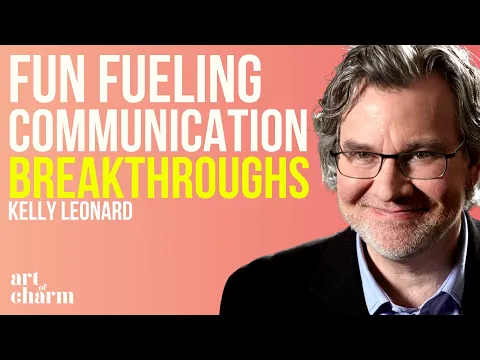
On our podcast, Kelly Leonard explains an improv exercise built around affirming an idea and contributing to it. He describes people building increasingly imaginative plans together.
Knowing the signs is step one. Acting on them calmly is step two. The X-Factor Accelerator is 90 days of guided practice in confidence and social skill. See what’s inside.
You can borrow that principle for a playful conversation. If they say the coffee research needs funding, you could add: “I'll handle the pastries budget.” You've picked up their contribution instead of starting an unrelated joke.
A good compliment does a lot of this work. Here is how to give a compliment that lands.
This is an adaptation of Leonard's improv advice, not a finding that an exercise creates attraction. You can enjoy a pretend premise while keeping your actual opinions and boundaries.
Give them room to respond
Say one thing and pause. They might build on it, laugh and change the subject, or answer seriously. Work with the response you get.
If they say, “Actually, I brought a lot of food because my friend has allergies,” follow that information. Ask what they've brought. The conversation has somewhere useful to go.
Let the conversation become personal
After the museum joke, you might ask which exhibit they liked. Share what caught your attention too. Our guide to having deeper conversations can help you follow that answer.
If you're on a date and would like another one, you can make a clear invitation. A string of jokes won't tell you everything you want to know about each other.
When the joke falls flat
A short reply, silence, or a change of subject gives you a reason to ease off. Ask an ordinary question or let the topic move on. A smile alone leaves room for politeness, nerves, or genuine amusement.
If someone tells you the comment hurt, respond to what they're saying: “I'm sorry. That was personal, and I won't joke about it again.” Then follow through.
In our conversation with Caroline Fleck about validation, she explains the importance of showing that you see and hear someone's experience. Here, that means listening to how your comment landed, even when you intended something different.
Keep appearance, identity, health, money problems, and private vulnerabilities out of your experiments with someone new. At work, consider whether the other person can comfortably disagree or leave the exchange, especially if you manage them.
Banter over text
Text gives you time to think and takes away your voice and expression. Keep the playful premise easy to recognize, especially while you're getting to know someone's humor.
Nicholas Epley discusses sarcasm and communication over email on our podcast. His discussion explores the gap between the tone you intend and the tone someone else can read. Email is the setting he discusses; these texting suggestions are practical adaptations.
You could bring back a shared joke: “Any news from the miniature-train committee?” If the answer is “Long day. Can't talk,” give them room: “Hope you get some rest. Catch up later.”
You can ask when you're unsure: “Were you joking there? I couldn't tell over text.” Avoid stacking messages to force a reaction.
Common questions
Can I banter if I'm shy or slow to think of a reply?
Yes. Start with one small observation and give yourself time. A warm, ordinary answer keeps a conversation going too.
Does banter mean someone is flirting?
Friends and coworkers banter too. Learn what the person wants through the conversation and a clear invitation, where appropriate.
How long should banter last?
Let the exchange guide you. When someone shares something serious or asks a genuine question, respond to that. There's no universal number of jokes or minutes.
What should I do if I can't think of anything clever?
Ask about something they said. Share your own reaction. You can get to know someone without producing a punchline.
Have a laugh and keep getting to know each other
You want to share the joke, enjoy their reply, and have something real to talk about afterward. Those moments can feel far away when you're planning every word in your head.
X-Factor Accelerator is Art of Charm's 90-day program for your social life and relationships: step-by-step practice on real conversations, plus weekly group coaching with Johnny. See how the 90 days work.
Start with a situation coming up in your life: joining friends at dinner, talking with someone new, or following up after a date. Practice sharing your own personality and responding to theirs, so there's room for both of you in the conversation.
Frequently asked questions
What is the difference between banter and teasing?
Banter goes both ways. Each person adds something and both get to enjoy it. Teasing can be one-sided, with one person making the other the target. If you tease, keep it gentle, aim it at the situation instead of their appearance or insecurities, and stop quickly if they seem uncomfortable.
How do I banter if I'm not naturally quick?
Skip the perfect comeback. Notice something real in the moment, like the long coffee menu or the late bus, and add a small exaggeration. Then pause and let them respond. Speed matters far less than listening. Building on their reply makes you look sharp even when your timing isn't.
Is banter the same as flirting?
No. Banter is a style of conversation that happens between friends, coworkers, and people who are flirting. Enjoying a joke with you doesn't tell you much about romantic interest. If you want to find out, follow the banter with a clear, friendly invitation instead of reading too much into the laughs.
What is the difference between friendly banter and witty banter?
Friendly banter is relaxed, low-pressure joking, often built on shared history. Witty banter adds a clever twist, like wordplay, irony, or a sharp observation. Both work the same way: one person offers something, the other builds on it. Start friendly, and let the wit come naturally once you're comfortable.
How do I know if banter has gone too far?
Watch their reaction. Short replies, silence, a forced smile, or a sudden change of subject mean ease off. If someone tells you a joke hurt, apologize plainly, drop that topic, and don't repeat it. Keep appearance, health, money, and private struggles out of your jokes, especially with someone new.
Want to know how you actually come across?
Explore the X-Factor Accelerator and see what practicing these skills looks like. See what's inside →Read next
More Dating articles- Coaching
Best Dating Coach for Men: 7 Options Compared (2026)
Best dating coach for men compared: Charisma on Command, SocialSelf, The Attractive Man, Toastmasters, Dale Carnegie, X-Factor Accelerator. - Coaching
Is a Dating Coach Worth It? Formats and Fit Compared (2026)
Is a dating coach worth it? Compare Charisma University, SocialSelf, Toastmasters, Dale Carnegie, bootcamps and X-Factor Accelerator by format. - Art of Dating
How to Compliment a Woman Without Being Creepy
How to compliment a woman without being creepy: be specific, praise her choices, expect nothing back, and read the setting. Examples inside. - Art of Dating
How to Not Be Nervous Around a Girl You Like
How to not be nervous around a girl you like: why it happens, what to do in the moment, easy openers, and a few-week plan to practice. - Art of Dating
Mixed Signals From a Girl: What They Mean and What to Do
Mixed signals from a girl usually mean her words and actions don't match. Learn the common patterns, what they mean, and how to get a clear answer. - Art of Dating
What Does It Mean When a Girl Plays With Her Hair?
What does it mean when a girl plays with her hair? It can signal interest, nerves, or habit. Learn to read the cluster and test it safely.