

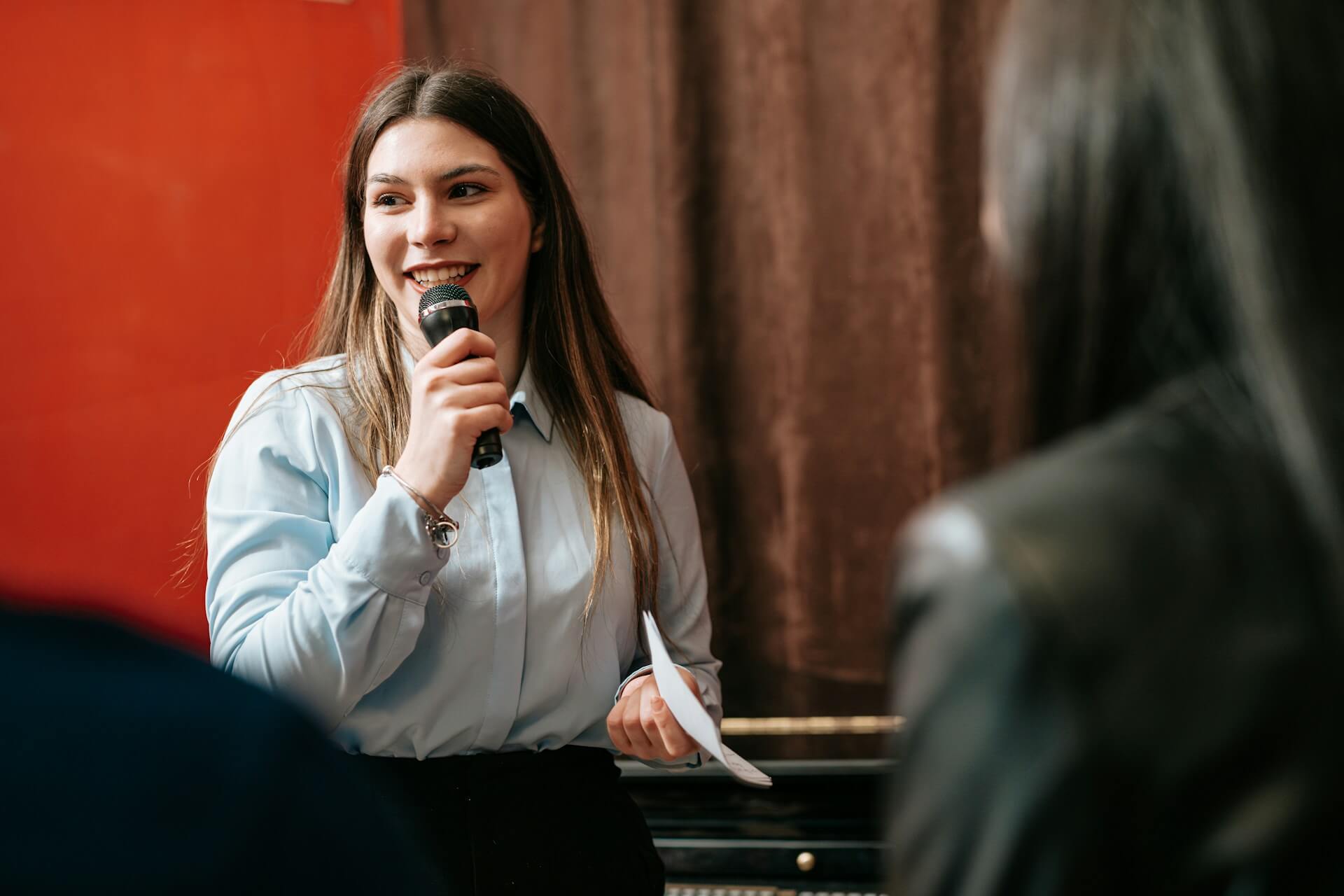
Not everyone is excited about the idea of speaking in front of a group. Many of us feel tense at the thought, especially if large crowds are involved. If you’ve ever avoided speaking up just to sidestep that spotlight, you’re not alone.
The good news is you can learn to be a public speaker without transforming into someone who craves attention. You don’t need to command a stage or deliver a perfect speech on cue. As spring begins and daily routines feel lighter, this can be a perfect time to try something new.
The fresh energy of the season gives us room to explore without pressure. Let’s look at how lowering the volume on expectations and breaking things down into smaller steps can help.
Make Speaking Feel Smaller
A lot of the pressure around public speaking comes from thinking it has to be big. A speech. A stage. All eyes on you. So we start by shrinking the moment.
- Think about speaking to one person instead of a whole group. Eye contact with just one listener helps conversations feel natural instead of staged.
- Use small moments as practice. Meetings, casual video calls, or even three-person hangouts give a chance to speak up without the spotlight feeling blinding.
- Try treating speaking more like a conversation and less like a performance. Responding to someone or sharing a simple thought can build comfort faster than prepping a show.
When we reframe the picture from “performer” to “communicator,” the stress lightens. You don’t have to take over the room. Just connect with it.
Start Where You’re Comfortable
You don’t have to jump into the deep end to get better at speaking up. The most useful starting point is any place you already feel a little more at ease.
- Choose topics that come naturally to you, where you don’t have to overthink or fact-check yourself. If you enjoy your hobby or like your role at work, talk about that.
- Pick settings that feel familiar, like team meetings or study groups. When your environment feels safe, your nervousness has less fuel.
- Practice answering questions aloud, alone. This helps train your mouth and mind to work together calmly, even if no one is around to hear it.
Sometimes confidence grows best in quiet corners. Starting small gives you a controlled space to warm up, so bigger moments feel less risky later.
Use Preparation as a Safety Net
Some of us need a little buffer to feel ready, and that’s okay. Preparation doesn’t mean locking yourself into a script. It means giving yourself something to hold onto when your mind skips a beat.
- Jot down a few notes or ideas before you speak. Writing them out in clear, simple phrases helps you remember the key parts.
- Focus on short parts, not memorizing everything word for word. Think of it like building blocks you can move around as needed.
- Try rehearsing once or twice with a friend, a mirror, or a coach just to hear yourself out loud. It’s less about performance and more about familiarity.
When speaking doesn’t feel like a mystery, it’s a lot harder for nerves to take over. Preparation gives you a flexible structure and a backstop if things get shaky.
Let Your Body Language Work for You
How you carry yourself can say just as much as your voice, even more when you’re nervous. The goal isn’t perfection. It’s steadiness.
- Whether sitting or standing, aim to feel grounded. Both feet on the floor, shoulders relaxed, no tight gripping of notes or your chair.
- Keep your breath steady. Easy breathing leads to a calmer voice. A full breath between thoughts gives your brain space to keep up.
- Make eye contact with one person at a time. Choose someone who looks open and friendly. It’s better than scanning randomly or looking over people’s heads.
Let your posture, breath, and gaze be a quiet confidence signal. Even if your voice shakes a little, your body can help carry the moment through.
Learn to Read the Room Without Fear
Reading the room gets easier when you stop measuring success by how lively the crowd is. Not every audience will cheer or laugh out loud. That doesn’t mean it’s going badly.
- Look for signs like someone nodding or leaning in. These are small markers that people are following along.
- If people seem quiet or tired, don’t take it personally. Stick to your rhythm and keep moving forward.
- Take feedback as gentle direction. It’s not a judgment. Let it help you shift gears if needed or reassure you that you’re landing well.
You don’t have to control how every listener reacts. The point is to share and connect, not to win approval. Staying present helps you respond instead of retreat.
Confidence Grows With Small Wins
Real growth doesn’t come from perfect speeches. It comes from those small moments when you speak a little more clearly or stay a bit calmer than last time. At The Art of Charm, our Social Calibration Method teaches public speaking as a skill you can build, not a performance you have to nail.
Our coaching programs and podcast episodes provide practical exercises for getting comfortable in real-world situations, step by step. By focusing on rhythm, presence, and your own authentic style, we make each speaking moment feel lighter and more manageable.
You can learn to be a public speaker without turning into someone completely different. The goal isn’t to become a performer. It’s to show up with your own voice and let that voice be heard. When we approach communication this way, speaking stops being a test and starts becoming an easier part of who we are.
Ready to transform your speaking skills into a strength you can rely on? At The Art of Charm, we guide you through the steps to learn to be a public speaker with ease and authenticity. Explore our techniques that make speaking up feel like second nature, not a performance. Begin your journey today and uncover the powerful voice within you.